
Magnite Streaming, Magnite DV+ SSPs and SpringServe ad server to help deliver premium ad experiences and monetise display and video inventory programmatically
Kuala Lumpur, Malaysia – July 25, 2024 – Magnite (Nasdaq: MGNI), the largest independent sell-side advertising company, announced that REV Media Group has selected Magnite’s full product suite to help streamline their programmatic capabilities across display and video. SpringServe will be the primary ad server connected to its video inventory, including Tonton and its news portals, helping to deliver a great user experience across the platform, while the Magnite Streaming and Magnite DV+ SSPs will help monetise display and video inventory programmatically.
With over 1.4 million users, Tonton is Malaysia’s first and largest homegrown video streaming service, offering access to local content and exclusive live events. Leveraging Magnite’s full product suite will help REV Media Group maintain a high quality user experience on their Tonton platforms, enable them to more effectively monetise their inventory, and grow programmatic activation through unified demand. SpringServe’s ad podding capabilities together with robust creative controls help ensure high quality and relevant ad delivery, preserving a premium experience for the user.
“Our inventory on Tonton has grown considerably since its launch. With the rise of short-form video content for news consumption on our news portal, it’s imperative that we align ourselves with partners who can support us in monetising it effectively,” said Nicholas Sagau, COO at REV Media Group. We’ve been impressed by what Magnite has been able to deliver for us so far, particularly in a live environment, and look forward to what we can accomplish together as Tonton continues to scale.”
“With viewers increasingly turning to ad-supported streaming as their primary way to watch television, it’s important for publishers to have all the tools they need to effectively monetise their content,” said Leon Siotis, Senior Vice President, SpringServe International at Magnite. “REV Media Group is in an important phase of growth and we’re looking forward to helping support this with the right tools and technology.”
##
About Magnite
We’re Magnite (NASDAQ: MGNI), the world’s largest independent sell-side advertising company. Publishers use our technology to monetize their content across all screens and formats including CTV, online video, display, and audio. The world’s leading agencies and brands trust our platform to access brand-safe, high-quality ad inventory and execute billions of advertising transactions each month. Anchored in bustling New York City, sunny Los Angeles, mile high Denver, historic London, colorful Singapore, and down under in Sydney, Magnite has offices across North America, EMEA, LATAM, and APAC.
About REV Media Group
REV Media Group is the leading digital publisher in Malaysia, representing over 35 top authority brands with an extensive distribution network that reaches out to more than 15 million people each month, about 80% of Malaysia’s internet population.
At REV Media Group, we believe in harnessing the power of data and technology to deliver engaging content that matters the most to our audience across multiple languages and platforms comprising News, Entertainment, Lifestyle, Technology and more.
Leveraging our comprehensive platform and reach, we strive to elevate brands to greater heights through influential, data-driven digital marketing solutions and exceptional content aimed at winning the hearts of consumers.
Media Contact:
Megan Hughes
mhughes@magnite.com
To truly benefit from the growth of programmatic and data capabilities in CTV, media owners should examine how their ad-serving tech interacts with their SSPs. By tailoring those connections, media owners can provide buyers with the most transparent, efficient, and performant access to inventory while creating better ad experiences.
Thoughtfully Crafted Ad Experiences
The streaming ad experience relies on an ad decisioning engine that can create the most optimal ad placement. For a watcher, this means seeing relevant ads that align with their interests and the platform they’re watching while not bombarding them with conflicting or repetitive messaging.
Meanwhile, buyers want access to the scaled audiences and streaming inventory with creative controls to ensure brand safety and avoid over-serving ads. Setting these controls in the ad server ensures all demand channels are considered, contributing to a more engaging ad experience.
Those ad server controls work in tandem with the SSP for the best outcomes. Efficiently communicating more information between the SSP and ad server will result in more optimal auction outcomes with reduced latency, enabling quicker ad decisioning across all demand.
This is especially important for live streaming, where diverse demand is needed to ensure a high-quality ad experience and the load on the technology is at its peak:
Our industry talks a lot about the right ad, time and target audience as the trifecta of successful ad delivery. We don’t talk enough about what achieving that requires. For a sports-first live TV streaming service that aggregates over 400 channels, like Fubo, having a flexible and responsive tech stack is critical for finding the best mix of ads that maximize revenue, deliver a high quality viewer experience, and achieve marketers’ goals. As a baseline, it requires an SSP with robust inventory and an ad server with real-time ad decisioning.
Jennifer Hess, VP, Global Ad Operations, Fubo
All this must be backed by real-time analytics and reporting workflows, empowering publishers with actionable insights to make fully informed decisions about what demand will perform, fuel optimizations such as dynamic floor pricing, and improve inventory management. Having an SSP and ad server in tight coordination allows these optimizations to be realized.
Access and Performance Advantages
The industry continues emphasizing supply-path optimization (SPO), reducing and optimizing hops in the supply chain to ensure that more ad budgets go toward working media. Tighter connections between the ad server and SSP can help here, creating more efficient processes that improve outcomes and boost monetization.
First and foremost, having greater access to premium inventory via shorter supply paths can lead to increased brand exposure and better campaign performance for advertisers. This also provides the best opportunity to ensure a seamless, TV-like ad experience that protects both buyer and seller. Better and quicker communication between the ad server and SSP reduces the risks of ad load latency and brings more diverse demand.
For advertisers who want to spend more on streaming, a higher standard for transparency is becoming non-negotiable. Greater visibility into the bidding process and supply source enables them to make more informed decisions about their ad spend. This transparency can lead to stronger relationships between advertisers and publishers and improved campaign performance.
The benefit of partnering with a unified ad server and SSP, like Magnite, is that it enhances workflow efficiency and provides better data for inventory management and strategy optimization for our clients. In my experience, these optimizations can only be realized when an SSP and ad server have a direct relationship.
Kelly McMahon, SVP of Global Operations at LG Ad Solutions
Enhanced Functionality and Innovation
An ad server integrated with an SSP also simplifies access to enhanced capabilities across audiences, reporting, forecasting, and performance. This makes it easier to implement, report on, and optimize CTV campaigns. It also creates a more streamlined approach to innovation across new ad formats (such as Tiles and pause ads), complex environments such as live streaming, diverse demand opportunities, and audience activations.

Having a holistic approach to audience management across the ad server and SSP can be hugely beneficial, too. On the SSP side, there are options to control, curate, connect, and safeguard audience enablement data to increase the value of the impressions. Having deeper insights into the contextual relevance of ad breaks beyond channel and app can further improve the user experience and the impact of ads. Therefore, having an ad server with real-time data capabilities combined with an SSP with audience data and activation tools can maximize yields.
Aligning for Full Video Control
Since acquiring SpringServe, Magnite has kept the ad server demand-agnostic while pushing what is possible with a more integrated proposition, improving the user experience in CTV. For instance, in June 2024 SpringServe introduced deep linking, designed to streamline the user experience across its platform and Magnite Streaming. This enhancement enables clients who utilize both services to easily navigate from a deal displayed in SpringServe to its corresponding detailed view in Magnite Streaming, ensuring a more integrated and insightful user journey.
This evolving, integrated approach between the Magnite Streaming SSP and Springserve ad server allows us to deliver reach and audience, bring unique value for buyers, support controls for sellers, and power a more relevant advertising experience for consumers.
As streaming platforms scale, SSPs play an increasingly critical role in helping publishers leverage programmatic ad buying for monetization. SSPs empower a wide range of publishers, from traditional TV networks to digital-first streaming services, by providing solutions tailored to their specific challenges and goals.
In the streaming landscape, there are a myriad of publisher types, ranging from OEMs, vMVPDs, FAST services, and programmers/broadcasters —- all with their own unique monetization models and needs.
Here’s a look at how Magnite works with various publishers to help them scale and monetize their inventory in the surging streaming market.
OEMs
Original Equipment Manufacturers (OEMs) can be viewed as the home screen of television.
As leading OEMs transition from hardware and device companies to entertainment companies, many seek to leverage valuable audience and ACR data, all while protecting user privacy and experience. Meanwhile, OEMs face unique challenges when it comes to balancing user experience with ad monetization. For example, OEMs may require different kinds of ad breaks for linear and FAST services depending on the type of inventory, such as live content or video-on-demand. Each type of inventory requires different technical support and business rules. Magnite addresses these challenges with technical solutions to ensure data privacy and prevent leakage. We also provide enterprise tools for frequency capping and ad break management, as well as support for both linear and on-demand content monetization.
As Jeremy Straight, vice president of TCL FFalcon CTV Ads, put it, “Magnite has been instrumental in helping us balance user experience with effective ad monetization. Their privacy-focused solutions and advanced tools for ad break management have allowed us to more seamlessly transition to compete with the big names in the entertainment industry as a content platform.”
vMVPDs
Virtual Multichannel Video Programming Distributors (vMVPDs) are services that allow users to watch their favorite TV channels through the internet without cable connections. They’re like a super-powered cable box for the internet age. However, they encounter their own set of specific challenges, including fluctuating subscriber numbers for some providers and managing the shifting ad monetization rules associated with being a distributor. They must also maximize ad fill rates for live content like sports and news, which is a goldmine for advertisers looking to reach highly engaged audiences.
However, they can also bring technical hurdles. Large numbers of viewers hitting a commercial break simultaneously strain ad servers. That’s where Magnite’s Live Stream Accelerator (LSA) steps in. When a wave of ad requests hits at once, LSA distributes requests smoothly for better ad response and viewer experience.
To support vMVPDs, Magnite offers tools to optimize fill rates and manage linear ad insertion, as well as support maximizing revenue from traditional pay-TV services.
As Andrew Tint, head of programmatic partnerships at DISH Media, shares, “Magnite’s tools and tailored solutions have significantly optimized our ad fill rates, particularly for Sling’s live sports and news, which experience substantial viewership spikes. This partnership has enabled us to capture additional revenue and meet the diverse needs of our advertising audience. We are excited to continue innovating and scaling our inventory in the dynamic streaming market with Magnite’s support.”
FAST Services
Over half of US households now use a Free Ad-Supported Streaming Television (FAST) service on a weekly basis, and FAST, which can be an entertainment treasure chest for the budget-conscious consumer, continues to be the fastest-growing streaming type.
However, FAST services still struggle with limited first-party data due to a lack of authentication. They also must differentiate ad experiences for various content types (linear vs. on-demand) for a better user experience.
Magnite helps support high-quality ad delivery for FASTs with contextual targeting solutions based on content and genre, along with tools for managing ad experiences across different content formats.
As Josh Sharma, vice president of Ad Partnerships at Allen Media Digital, shared, “Magnite’s contextual targeting and flexible ad management tools have enabled us to deliver tailored ad experiences, driving greater engagement with our audiences.”
Programmers/Broadcasters
Programmers and broadcasters are the cornerstones of the media entertainment world. Broadcasters’ role in the fast-evolving streaming landscape comes with its own set of challenges—all while keeping their audience front and center. Programmers must manage the distribution of their content, which creates unique considerations for managing streaming inventory across various distribution channels with different ad rules, balancing inventory sold directly vs. through the SSP, and handling complex advertiser relationships involving Upfront commitments.
Magnite’s tools for managing inventory across diverse platforms and support for establishing and enforcing ad delivery rules across channels help programmers scale. Furthermore, the white-glove service provided by our Demand Facilitation team helps programmers and broadcasters drive growth in areas they may have overlooked, delivering major results for their partners.
As Tyler DeNicola, vice president of A&E, shared, “Magnite’s advanced inventory management and optimization tools have streamlined our ad operations across multiple platforms, allowing us to meet our Upfront commitments and grow our advertiser relationships.”
Ultimately, as streaming continues to surge, more ad dollars will likely flow programmatically to drive monetization. As publishers look to capture the streaming moment, they can look to their SSP as a partner to help them grow. Across all publisher types, Magnite offers a robust infrastructure for managing inventory and deals, comprehensive support for ad delivery rules and frequency capping, and access to an expansive advertiser network.
Magnite invites streaming publishers of all types to explore how their SSP solutions can help them scale and monetize their inventory more effectively in the evolving streaming market.
Milo Indonesia wanted to celebrate its 50th Anniversary in Indonesia and generate brand awareness. Magnite, together with agency Dentsu Indonesia, launched a programmatic roadblock campaign across Indonesia’s premium streaming platforms Viu, Vidio and WeTV, enabling the brand to gain 100% share of voice (SOV) for maximum exposure.
Download the case study to discover how Magnite successfully used streaming advertising to increase brand awareness and purchase intent for Milo Indonesia.
Nestlé Indonesia has introduced a new limited edition NESCAFÉ Biscuit Coffee with Marie Regal Biscuit. To market the product, Nestlé Indonesia wanted to boost audience reach by leveraging the growing popularity of streaming. Magnite, together with agency Dentsu Indonesia, activated a programmatic roadblock campaign across key streaming platforms Viu, Vidio and WeTV. This enabled the brand to secure full exposure and own 100% share of voice (SOV) during prime times to drive maximum awareness.
Download the case study to discover how Magnite successfully achieved notable uplift in brand awareness, recall and usage for Nescafe Indonesia with the power of streaming advertising.
“We truly appreciate the opportunity to work together on the Roadblock campaigns. The innovative strategies implemented to run the campaigns have been instrumental in achieving our goals and we look forward to continuing this successful collaboration in the future.”
– Dentsu Nestle Team
Control Center is Demand Manager’s “App Store” for third-party partners, offering an array of easily configurable solutions to help publishers drive the best outcomes across their media operations. We previously highlighted how our Yield optimizations enable publishers to maximize yield while maintaining the optimal user experience.
Change-Fueled Programmatic Innovation
Publishers have a number of key components to showcase when attracting and maintaining demand for their inventory. Whether it’s unique audiences, efficient paths to their inventory, or the promise of more sustainable ad investments, the key is proving value to the advertiser. For instance, Carbon emissions have become a key focal point for sellers on a mission to drive cost savings and reduce the environmental impact of advertising, while buyers are setting aside exclusive budgets to invest more in eco-friendly publishers. Proving and optimizing value to advertisers also requires a variety of measurement options, particularly with challenges around signal loss.
As a result, we’re seeing innovation around democratizing campaign optimization capabilities, both from an analytics and reporting perspective, as well as implementing insight-driven optimizations that come from those analytics. This article highlights some of our Control Center partners that are providing tools to measure and optimize different aspects of programmatic campaigns.
Brand Metrics – Brand Lift Measurement at Scale
What is Brand Metrics, and how does it benefit publishers?
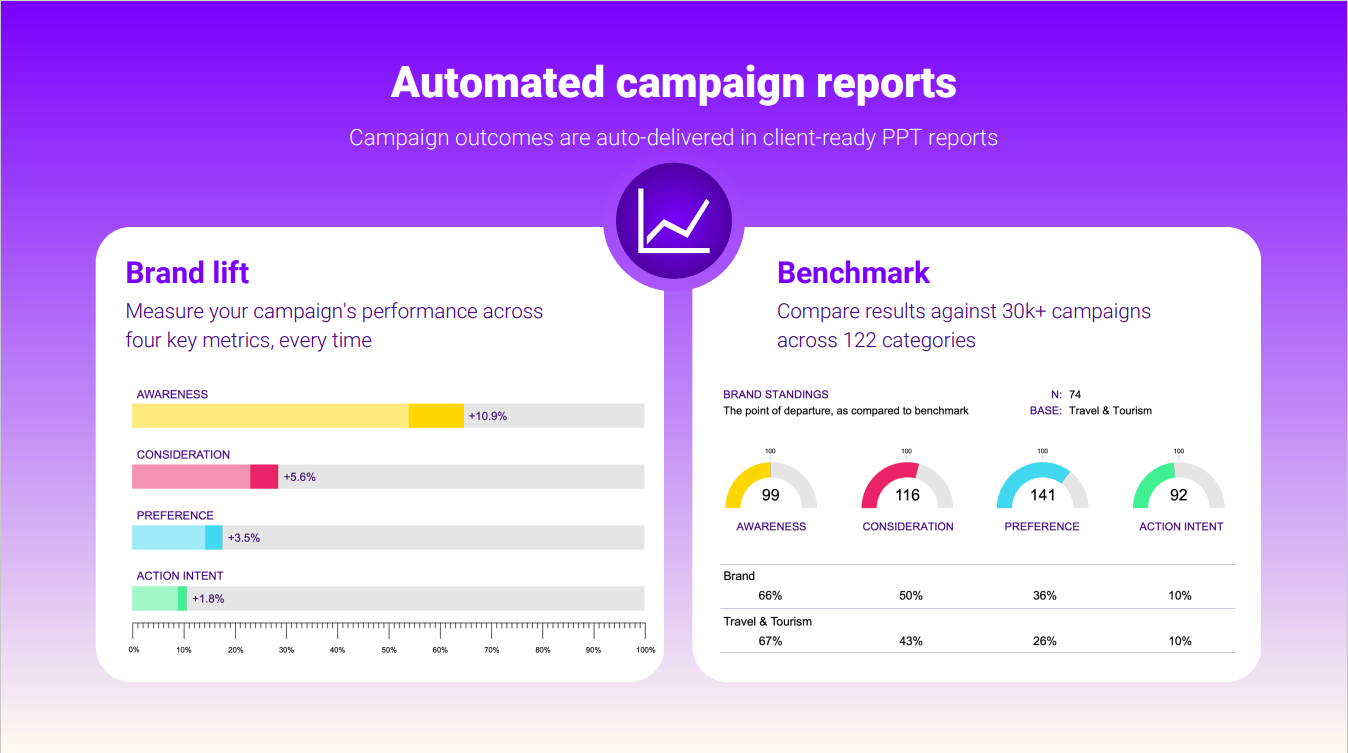
Brand Metrics’ award-winning platform enables publishers to measure brand lift from digital advertising campaigns at true scale. It transforms effectiveness from an ad hoc piece of research, only possible on the largest campaigns, into an always-available campaign metric that is automatically compared to a benchmark database of approximately 30,000 campaigns.

Brand Metrics’ unique technology gives publishers a simple, cost-effective, and automated way to capture four mid-funnel metrics—awareness, consideration, preference, and action intent—on even the smallest campaigns. It helps to move the conversation beyond standard delivery ad performance metrics and helps democratize campaign effectiveness data, ensuring that a publisher’s true value, beyond the click, is properly recognized.

How can publishers use Brand Metrics’ brand lift data to grow revenue?
Having brand lift measurement so easily available enables commercial teams to include it on all future RFPs as added value on proposals, to grow lower budget advertisers, to push higher value formats and to use the data to build their own benchmarks. Consistent brand lift data helps publishers provide more strategic input into future campaigns and to combine this data with other first-party data to provide a more holistic view of their value to advertisers.
In fact, publishers who use Brand Metrics at the greatest scale are seeing a brand lift average of 16% above the benchmark for their advertisers, as they standardize incorporating their learnings into future proposals.
Greenbids – Reducing emissions from Ads in real-time
What is Greenbids, and how does it benefit publishers?
Greenbids is an advanced optimization solution that leverages artificial intelligence to power sustainable advertising operations. For publishers, Greenbids offers significant benefits. By integrating Greenbids, publishers can effectively minimize wasteful ad calls and streamline their ad operations, leading to a reduction in carbon emissions, an increase in SSP participation rate, and an improvement in web performance.
Greenbids technology predicts which ad calls are likely unproductive and cuts them out, thereby reducing the server load and energy consumption associated with processing these calls to the programmatic chain. This not only makes campaigns more environmentally friendly but also helps publishers capture green media budgets.
What opportunities and challenges exist for publishers in finding and implementing Carbon reduction strategies?
Opportunities:
- Increased Efficiency and Revenue: By adopting carbon reduction strategies, publishers can enhance operational efficiency and potentially increase their revenue through the green media budgets from advertisers buying Greenbids’ Green PMP.
- Brand Enhancement: Publishers who actively engage in carbon reduction can strengthen their brand image, appealing to a growing segment of eco-conscious advertisers and audiences.
- Innovation Leadership: Leading the way in sustainability can position publishers as pioneers in the media industry, driving innovation and setting new standards.
Challenges:
- Technological Integration: Implementing new technologies for carbon reduction often requires substantial initial investment and can involve complex integrations with existing systems, which is not the case with the Greenbids-Magnite integration.
- Economic Implications: Balancing cost-effectiveness with sustainable practices can be challenging, especially in competitive markets where immediate returns are prioritized.
Can you share an illustrative example of how a publisher might use GreenBids?
Consider a medium-sized digital news publisher facing challenges with high server loads and energy consumption due to processing many ineffective ad calls. By implementing Greenbids, the publisher can utilize AI tools to identify and eliminate these wasteful ad calls. For instance, if predictive models indicate that only 80% of outcoming ad requests are likely to result in profitable engagements, then the other 20% can be ignored.
Results might include:
- Reduction in carbon resource usage by up to 30%, decreasing overall energy consumption and carbon footprint.
- Improvement in ad revenue by being included in agencies/advertisers Green PMP as well as increased SSP participation rate.
- Enhanced user experience due to improved web page performance, such as faster load times.
TELUS will leverage Magnite’s SpringServe Ad Server and Streaming SSP to bring innovative advertising opportunities to the Canadian market
TORONTO – July 9, 2024 – Magnite (NASDAQ: MGNI), the largest independent sell-side advertising company, today announced TELUS (TSX: T, NYSE: TU), a world-leading communications technology company, has selected Magnite’s SpringServe ad server and Magnite Streaming SSP as its preferred ad technology solutions in Canada. TELUS will utilize Magnite’s ad server for its Free Ad-Supported TV (FAST) and online video advertising inventory.
The partnership comes at a time when the TV industry is undergoing a seismic shift, with consumers increasingly watching TV content through ad-supported streaming. According to research conducted by Magnite, 74% of Canadian consumers are watching streaming TV compared to only 51% who are watching paid traditional TV[1]. Since rolling out FAST channels to TELUS TV+ customers in April, TELUS has enabled additional TV offerings at no cost to customers. The FAST channels, including TIME, Tastemade, The Washington Post, and more, also provide a unique opportunity for advertisers and agencies to elevate their digital strategies and connect with TV audiences.
Magnite’s SpringServe ad serving platform is built for connected TV (CTV) and video advertising, providing TELUS with better insight, transparency, and control to deliver more optimal video ad experiences. Magnite’s Streaming SSP enables TELUS to manage and monetize its CTV inventory with tools specifically designed to support premium, long-form video, and high-quality viewing experiences.
“Being selected to support one of the largest telecommunications companies in Canada and amplifying their CTV and streaming TV business is a great privilege for us,” said Damien Véran, Head of Canada and LATAM at Magnite. “As TELUS’ primary ad tech partner, TELUS is activating their set-top box, streaming, and online video inventory on the Magnite ad server and consolidating their audiences to combat fragmentation challenges for buyers. We are eager to forge new pathways that will redefine the Canadian advertising landscape for the better and create more impactful advertising experiences for their customers.”
“Our collaboration with Magnite equips us with the best technology needed to deliver a premium advertising experience for both consumers and brands,” said Amit Nag, Vice-President of Smarthome, Entertainment and Transformation at TELUS. “FAST channels represent a substantial growth area for our business, and we’re excited to work with the Magnite team to create better advertising-supported content experiences for our customers and to make it easier and more efficient for advertisers to connect with Canadian viewers.”
##
About Magnite
We’re Magnite (NASDAQ: MGNI), the world’s largest independent sell-side advertising company. Publishers use our technology to monetize their content across all screens and formats including CTV, online video, display, and audio. The world’s leading agencies and brands trust our platform to access brand-safe, high-quality ad inventory and execute billions of advertising transactions each month. Anchored in bustling New York City, sunny Los Angeles, mile high Denver, historic London, colorful Singapore, and down under in Sydney, Magnite has offices across North America, EMEA, LATAM, and APAC.
About TELUS
TELUS (TSX: T, NYSE: TU) is a dynamic, world-leading communications technology company with more than $20 billion in annual revenue and over 19 million customer connections spanning wireless, data, IP, voice, television, entertainment, video, and security. Our social purpose is to leverage our global-leading technology and compassion to drive social change and enable remarkable human outcomes. Our longstanding commitment to putting our customers first fuels every aspect of our business, making us a distinct leader in customer service excellence and loyalty. The numerous, sustained accolades TELUS has earned over the years from independent, industry-leading network insight firms showcase the strength and speed of TELUS’ global-leading networks, reinforcing our commitment to provide Canadians with access to superior technology that connects us to the people, resources and information that make our lives better.
Operating in 32 countries around the world, TELUS Digital Experience (TSX and NYSE: TIXT) is a leading digital customer experience innovator that designs, builds, and delivers next-generation solutions, including AI and content moderation, for global and disruptive brands across strategic industry verticals, including tech and games, communications and media, eCommerce and fintech, banking, financial services and insurance, healthcare, and others.
TELUS Health is a global healthcare leader, which provides employee and family primary and preventive healthcare and wellbeing solutions. Our TELUS team, along with our 100,000 health professionals, are leveraging the combination of TELUS’ strong digital and data analytics capabilities with our unsurpassed client service to dramatically improve remedial, preventive and mental health outcomes covering nearly 72 million lives, and growing, around the world. As the largest provider of digital solutions and digital insights of its kind, TELUS Agriculture & Consumer Goods enables efficient and sustainable production from seed to store, helping improve the safety and quality of food and other goods in a way that is traceable to end consumers.
Driven by our determination and vision to connect all citizens for good, our deeply meaningful and enduring philosophy to give where we live has inspired TELUS and our team to contribute $1.7 billion, including 2.2 million days of service since 2000. This unprecedented generosity and unparalleled volunteerism have made TELUS the most giving company in the world. Together, let’s make the future friendly.
For more information about TELUS, please visit telus.com, follow us at @TELUSNews on X and @Darren_Entwistle on Instagram.
Media Contacts
Magnite
Kar Yi Lim
TELUS Communications
Lena Chen
[1] Magnite Canada Streaming Report, 2023 [link]
MILAN, ITALY – July 3, 2024 – Magnite (NASDAQ:MGNI), the largest independent sell-side advertising company, today announced that CairoRCS Media, one of the largest Italian communication groups, is implementing Demand Manager to more effectively monetise their display and video inventory programmatically. Built on Prebid technology, Demand Manager empowers leading publishers with tools and insights to help them grow revenue.
CairoRCS Media, based in Milan, operates as one of the largest saleshouses in Italy with publications including Corriere della Sera, Gazzetta dello Sport and La7, which serve over 30 million people.
Magnite’s Demand Manager solution makes wrapper management more seamless for publishers through an intuitive user interface that allows them to deploy, analyse, and manage configurations without additional development work. Demand Manager provides CairoRCS Media with valuable insights, control, and flexibility through features such as A/B testing with machine learning-driven recommendations and microwrappers.
“For such a significant publishing group like CairoRCS Media to choose Demand Manager is a proud moment for everyone at Magnite,” said Mariano de Luca, Revenue Lead for Italy, Spain and MENA at Magnite. “We’ll continue working very closely with CairoRCS Media, analysing the operational efficiencies that Demand Manager delivers for them so we can keep leveling up our offering through our technology and expertise.”
“As the publishing world is always looking for new tools to make managing advertising more efficient, collaborating with cutting-edge technology partners is essential,” added Davide Grillo, Yield Optimization and Programmatic Manager at CairoRCS Media. “The features within Demand Manager are built with publisher needs in mind. The innovative and easy-to-implement tools have reduced the workload on our teams, allowing us to enhance our yield optimization strategy with advanced reporting that supports testing and recommendations.”
– END –
About Magnite
We’re Magnite (NASDAQ: MGNI), the world’s largest independent sell-side advertising company. Publishers use our technology to monetize their content across all screens and formats including CTV, online video, display, and audio. The world’s leading agencies and brands trust our platform to access brand-safe, high-quality ad inventory and execute billions of advertising transactions each month. Anchored in bustling New York City, sunny Los Angeles, mile high Denver, historic London, colorfulSingapore, and down under in Sydney, Magnite has offices across North America, EMEA, LATAM, and APAC.
About CairoRCS Media
CairoRCS Media is the concessionaire born from the integration of Cairo Pubblicità and RCS Pubblicità, which boasts a unique media portfolio in terms of editorial quality and social relevance. A company that makes synergy its strong point, it has established itself as the point of reference for all those who want to communicate effectively.
CairoRCS Media sceglie Magnite e il suo prodotto di ottimizzazione wrapper Demand Manager per aumentare le entrate del programmatic advertising
MILANO, ITALIA – 3 luglio 2024 – Magnite (NASDAQ:MGNI), la più grande azienda indipendente di advertising sell-side, ha annunciato oggi che CairoRCS Media, uno dei più importanti gruppi di comunicazione italiani, sta implementando Demand Manager per monetizzare in modo più efficace la propria inventory display e video in programmatic. Demand Manager offre ai principali publisher strumenti e insight per supportare la crescita di ricavi.
CairoRCS Media, con sede a Milano, è una delle più grandi concessionarie pubblicitarie italiane con testate editoriali come Corriere della Sera, Gazzetta dello Sport e La7 seguite da oltre 30 milioni di utenti.
La soluzione Demand Manager di Magnite offre ai publisher una facile gestione del wrapper attraverso un’interfaccia utente intuitiva che consente loro di implementare, analizzare e gestire le configurazioni senza ulteriori interventi di sviluppo. Demand Manager fornisce a CairoRCS Media preziosi insight, controllo e flessibilità tramite funzionalità come A/B testing con raccomandazioni basate sul machine learning e microwrapper.
“La scelta di Demand Manager da parte di un gruppo editoriale così importante come CairoRCS Media è motivo di orgoglio per tutti in Magnite”, ha affermato Mariano de Luca, Revenue Lead di Magnite per Italia, Spagna e MENA. “Continueremo a lavorare a stretto contatto con CairoRCS Media, analizzando le efficienze operative offerte loro da Demand Manager, per poter continuare a migliorare la nostra offerta attraverso la nostra tecnologia e le nostre competenze.”
“Poiché il panorama editoriale è sempre alla ricerca di nuovi strumenti per rendere più efficiente la gestione degli spazi pubblicitari, la collaborazione con partner tecnologici all’avanguardia è essenziale.” ha aggiunto Davide Grillo, Yield Optimization and Programmatic Manager di CairoRCS Media. “Le funzionalità di Demand Manager sono state realizzate pensando alle esigenze specifiche degli editori. Gli strumenti, innovativi e di facile implementazione, hanno ridotto il carico di lavoro sui nostri team permettendoci di potenziare la nostra strategia di yield optimization grazie alla reportistica avanzata a supporto di esperimenti e raccomandazioni.”
Informazioni su Magnite
Magnite (NASDAQ: MGNI), è la più grande azienda indipendente di advertising sell-side al mondo. I publisher utilizzano questa tecnologia per monetizzare i propri contenuti su tutti gli schermi e formati, tra cui CTV, online video, display e audio. Le agenzie e i brand leader a livello mondiale si affidano alla nostra piattaforma per accedere a un ad inventory di elevata brand-safety e di alta qualità ed eseguire miliardi di transazioni pubblicitarie ogni mese. Con sedi principali nella vivace New York, nella soleggiata Los Angeles, nella Mile High Denver, nella storica Londra, nella colorata Singapore e giù fino a Sydney, Magnite ha uffici in Nord America, EMEA, LATAM e APAC.
Informazioni su CairoRCS Media
CairoRCS Media, è la concessionaria nata dall’integrazione tra Cairo Pubblicità e RCS Pubblicità, che vanta un portafoglio mezzi unico per qualità editoriale e rilevanza sociale. Un’azienda che fa della sinergia il suo punto di forza, confermandosi il riferimento imprescindibile per tutti coloro che vogliono comunicare in modo efficace.
Shoppable CTV and/or interactive TV are umbrella terms for ways that TV media can go beyond awareness and begin moving down the sales funnel via advanced targeting, attribution, and interactivity. Magnite and BrightLine are working together to bring a suite of scalable dynamic and interactive ad formats to advertisers that do just this – move the standard TV impression beyond awareness to drive engagement online and in-store. We spoke to Dan Kelly, Vice President of Global Sales at BrightLine, to learn more about how they see this opportunity developing.
What advancements has CTV made when it comes to advertising opportunities throughout the levels of the sales funnel?
Terms like “retail media” have evolved to be more about advertising opportunities within retailers’ own footprint (in-store and online) and using their shopper data in off-site media environments such as CTV. The digital connectivity of CTV allows retailers to engage with viewers in unique ways, helping to raise awareness and recall and increase the likelihood of sales conversions. Retailers can now enhance messages across media according to a viewer’s location and customize the offering to that location to drive both online and in-store purchasing.
CTV is a great ally in top-of-the-funnel campaigns where tech and data are combined to make those campaigns smarter, driving greater engagement, awareness, and consideration. As we’ve continued to develop that tech and data, new dynamic and interactive ad opportunities are supporting mid-to-lower funnel placements, too.
What retail/shoppable formats are BrightLine and Magnite delivering? And what’s next?
The core of BrightLine’s Accelerator Units are available to Magnite’s clients, including In-Stream Interactive, Addressable, and Expandable formats. Within BrightLine’s list of in-stream possibilities, product scrollers are a popular format for retailers to showcase products for any shopping event. Advertisers of all shapes and sizes use it to feature an interactive catalog of products on screen that can be scrolled through via remote control. These units allow viewers to “window shop” right inside the commercial without the need to grab their phone.
Interactive units allow for product recommendations. More and more brands are mitigating the effects of ad fatigue by making spots fun and engaging with units that poll viewers on their tastes and preferences, which in turn make real-time recommendations for products that might be right for them.
While dynamic deals are commonplace on the web, Magnite and BrightLine also bring dynamic creative to the big screen, allowing geo-addressable creative overlays to highlight the viewers’ closest retailer or local deals dynamically.
While many in the industry are touting QR codes as a means of driving transactions off-device, there’s ample data showing that the onscreen engagement via remote is superior. For instance, in some of our research we saw an example where BrightLine ad units reached an engagement rate of 1.12% on average, or 56 times QR scan rates.
How important has programmatic been in the growth and development of these formats?
With the accelerated demand for interactive and dynamic retail units, having a programmatic offering that can continue to deliver a great user experience at scale is critical. Brands activating programmatically are looking to engage with viewers across the full CTV marketplace. The more viewers are exposed to interactive formats while watching CTV, the more common it will be to interact with the ads.
How do you advise buyers on best practices, given these new options across the funnel?
The key is starting with understanding the goals of a specific campaign or advertiser. For many, the mid-funnel engagement available via on-screen interactivity drives the impact brands are looking for, which is well beyond the top-of-funnel awareness that traditional ad spots serve. An auto brand, for example, may want viewers to engage with specific new features of the latest model, in which case interacting with the vehicle in ways that go beyond a 30-second ad is the right next step down the funnel. Others may be better suited to driving viewers to visit a local dealer event by using a dynamic dealer locator ad unit.
With high video completion rates due to the unskippable nature of the platform, CTV interactive video units offer both the ability to make a branding impact and give viewers the opportunity to engage with the brand.
Can you give us some illustrative examples of how advertisers leverage dynamic ads in a multiscreen environment and the results they’ve seen from doing so?
In recent work with Lucid – highlighted in our ‘State of the TV Ad (Re)volution – 2023’ report – we saw double-digit lifts in brand awareness across various categories, including outdoor living, electronics, pharmaceutical, and energy. For instance; a pharmaceutical brand running a campaign with interactive ads saw a 23% increase in brand lift and 46% bump in ad recall. The impact can extend beyond brand lift as well, with an outdoor living brand seeing a 48% rise in purchase intent. Additionally, a major retailer that recently ran a CTV campaign with BrightLine and Magnite saw a 19% relative lift in message association when running dynamic creative.

As retailers and brands—both endemic and non-endemic—continue to invest in streaming, it’s important that we continue to adapt to their requirements and the possibilities available. Particularly as the focus has increased on shoppable media in video, there’s an opportunity for brands to meet their lower-to-mid funnel KPIs in highly engaged and interactive environments. Working together, Brightline and Magnite are helping both brands and media owners make the most of those opportunities.
Emily, one of our Leadership Development Managers, takes us through a typical day in her life in Magnite’s Broomfield, Colorado office.
Magnite’s Day in the Life series dives into the various people and teams that make up the world’s largest independent sell-side ad company.
How would you explain what you do to someone outside the industry?
I help people discover their leadership potential, regardless of their titles. We ditch the common understandings about leadership, focus on empowering everyone to support each other, and tap into the power of human connection dynamics. It’s about creating a culture where everyone feels like they’re part of something bigger than themselves and can make a real difference no matter what part of the business they are a part of. I do this through workshops, training programs, and one-on-one coaching. It’s incredibly rewarding to see people step into their own style of leadership and watch the whole team soar. This is a new, and very important area of focus for Magnite, and I would say we are leading the charge in making people think differently about leadership and who in an organization can “be a leader” in the workplace.
How does your team support Magnite? Who are your closest collaborators in other departments?
As a global company, our communication, collaboration, and connection are absolutely essential to providing our clients – both internal and external – with everything they need to be successful. I am really fortunate to be on the People team. We partner with different departments to understand their specific needs and develop leadership programs tailored to their teams. I work with senior managers to consider the specific support that their respective teams need and find ways to capitalize on those areas of opportunity. My goal is to make sure everyone at Magnite has access to the leadership development tools that are most relevant to them.
What does a typical day at Magnite look like for you?
Every single day, I have conversations with folks about the true meaning of leadership and how it applies to them. A big part of my role is helping people unlearn what they think they know about leadership and build it back up from scratch. It’s a really unique opportunity and actually one of the parts of the role that I enjoy the most because of the excitement that comes with the revelation that leadership development isn’t just for senior management.
One of my largest focuses is making sure that every member of our team is actively supporting others while also being supported and that their potential is being met. In a lot of ways, that’s what leadership actually boils down to. Usually, I host workshops around our leadership competencies, facilitate sessions with our managers on topics that are specific to them, design team supports, or chat one-on-one with team members who are looking for some advice.
Our people’s needs are constantly evolving, so I try to stay in the loop with as many of our different business units as possible. I make myself accessible to anyone throughout the company for ongoing support, one-off brainstorms, or check-in sessions.
Talk about a recent project that you’re proud of yourself and your team for accomplishing.
This year, I launched a program that is laser-focused on the practical application of our leadership framework. These are interactive sessions that dial into our eight leadership competencies that not only bring the subject matter to each person’s individual role but also to their lives at large.
We have made these workshops accessible to all Magnites in an effort to supplement their development in a way that is truly rooted in our company values and vision. To date, we’ve made it halfway through the sessions and have had incredible attendance, both virtually and for the live sessions that have been hosted. This could not have been possible without the help of the People Business Partners, our Ops partners, and the energy that comes from the participants. I’m excited to see what comes in the second half of the year!
What do you enjoy most about your role?
The people, hands down! I have had the pleasure of meeting so many members of our organization just by the nature of what I do. I feel so fortunate that I get to work with our teams across the globe on topics that bridge whatever differences might exist. I have learned so much from my colleagues and have so much respect for all that they do. Constantly and consistently, I am humbled by the knowledge, skills, and lived experiences that our team members bring to work every single day. I know it might be cliché to say, but my job would not be the same without every single colleague I’ve had the pleasure of connecting with.
You’re head of Prism, Magnite’s LGBTQIA+ employee resource group. How have you seen Prism make a positive impact at Magnite?
Prism is a relatively new group that aims to create a community and a support network within the company. Being a part of the group isn’t necessarily the central focus of our work identities. Rather, Prism is meant to be a space where you can chat about things that might be present for you outside of your role. It’s also meant to be a support network to fall back on.
We have been able to bring members of the larger team together from across the US and global teams around a shared identity, which can sometimes be a bit isolating. We are into our second year now and are starting to gain some traction in being able to provide a space where folks can ask questions, have some fun, and, most importantly, demonstrate allyship. As it’s Pride Month, we are seeking to provide some education for those who may not truly understand the purpose of the month or why it’s worth celebrating.
What’s your go-to hobby to unwind and recharge outside of the office?
I’d have to say it’s a tie between puzzles and playing ice hockey! Those are quite different, of course, so it depends on whether I’m feeling the need to socialize. I enjoy all types of puzzles. It’s a great way to use my brain without having to focus too much. Then, with hockey, I have a great community of friends that I’ve built through the sport. A little exercise is never a bad thing, either!
Implementation of SpringServe has helped YTV achieve revenue uplift and maximize operational efficiencies
TOKYO – June, 19, 2024 – Magnite (NASDAQ:MGNI), the largest independent sell-side advertising company, announced that its SpringServe ad serving technology is powering video advertising on Yomiuri Telecasting Corporation’s (YTV) on demand services, ytv MyDo! and TVer. Implementing SpringServe technology has helped YTV and ytv media design achieve revenue uplift and maximize operational efficiencies.
SpringServe’s sophisticated ad serving and inventory management capabilities help publishers streamline monetization to capture the full value of their inventory, while ensuring high quality ad experiences. Working with SpringServe enables YTV to help deliver premium video advertising experiences across ytv MyDo! and TVer services.
“We are very pleased to be using SpringServe to help YTV deliver a high-quality advertising experience to viewers of ytv MyDo! Ytv MyDo! was created to provide viewers with an extremely high quality viewing experience regardless of their location or device,” said Akito Mizui, Director of ICT Technology at ytv media design.“ Accomplishing this feat requires technology engineered specifically for video and we’ve been pleased to have found this with Magnite and SpringServe. SpringServe technology has helped us achieve greater efficiencies and given us a more holistic view of overall performance, leading to increased revenue. We look forward to seeing continued positive results.”
“SpringServe can be used across any video environment and we’re excited that YTV has seen great results as one of the first broadcasters in Japan to implement the technology,” said Ken Harada, Managing Director, Japan at Magnite. “We look forward to working with them to enhance delivery of premium ad experiences on their properties.”
##
About Magnite
We’re Magnite (NASDAQ: MGNI), the world’s largest independent sell-side advertising company. Publishers use our technology to monetize their content across all screens and formats, including CTV, online video, display, and audio. The world’s leading agencies and brands trust our platform to access brand-safe, high-quality ad inventory and execute billions of advertising transactions each month. Anchored in bustling New York City, sunny Los Angeles, mile-high Denver, historic London, colorful Singapore, and down under in Sydney, Magnite has offices across North America, EMEA, LATAM, and APAC.
About Yomiuri Television
Yomiuri Telecasting Corporation is an Osaka-based television station serving the Kinki region. YTV produces programs for the Kansai region in addition to content for the entire country, and is known for its production of “Detective Conan”. Yomiuri TV is also engaged in a wide variety of business development beyond its television framework.
About ytv media design
ytv media design is the Internet business and strategy company of the Yomiuri TV Group. ytv media design was established in March 2018 and focuses on digital media. Its main business activities include the operation of ytv MyDo! and “anna”, a website which aims to provide community-based information in the Kansai region. In this way, ytv media design plays a strategic role in bringing Yomiuri TV Group content to a wide audience through digital devices.
##
Magniteの広告配信テクノロジー「SpringServe」が、読売テレビの動画広告を支援
読売テレビが、SpringServeを活用して収益増と広告運用の効率化を実現
世界最大の独立系オムニチャネルSSPであるMagnite(NASDAQ:MGNI、読み方:マグナイト)は、讀賣テレビ放送株式会社(以下 読売テレビ)の動画配信サービス「ytv MyDo!」における動画広告配信および、「TVer」内で読売テレビが提供する番組の動画広告配信を、Magniteの広告配信テクノロジー「SpringServe」を活用して支援していることを発表しました。
ytv MyDo!は読売テレビの動画配信サービスで、株式会社ytvメディアデザイン(以下 ytvメディアデザイン)が運営委託を受けています。読売テレビ、ytvメディアデザインは、SpringServeの導入により収益増と広告運用の効率化を実現しています。
SpringServeは、高度な広告配信およびインベントリ管理の機能を持つ広告配信テクノロジーです。インベントリの価値を最大限に引き出しつつ、視聴者へ高品質の動画広告体験を提供し、パブリッシャーの収益化を支援します。SpringServeの活用により、読売テレビはytv MyDo!とTVerの視聴者に高品質の広告体験を提供しています。
ytvメディアデザインでICT技術部長を務める水井章人氏は次のように述べています。「ytv MyDo!は、視聴者の皆様が場所・端末を問わずどこから番組を見ていても、きわめて高い品質の視聴体験を得られるようにするために誕生しました。これを実現するためには、動画専用に構築された広告配信テクノロジーが不可欠でした。こうしたなか、ytv MyDo!とTVer においてMagniteのSpringServeを活用して、大幅な効率改善を実現し、総合的なパフォーマンスを俯瞰できるようになり、収益増を達成できたことを嬉しく思います。今後も継続してよい成果が得られることを期待しています。」
Magnite の日本事業を担当するマネージングディレクターの原田健は次のように述べています。「SpringServeは、あらゆる動画視聴環境で利用いただくことができる広告配信テクノロジーです。読売テレビが日本の放送事業者としていち早くこのテクノロジーを導入し、素晴らしい成果を実現していることをとても嬉しく思います。読売テレビの動画配信サービスが、さらに質の高い広告体験を提供できるよう、今後も協業を進めていくことを楽しみにしています。」
以上
読売テレビについて
読売テレビは、大阪に本社を置く、近畿2府4県を対象に放送を行っているテレビ局です。番組制作においては、関西圏向けの番組だけでなく、全国に向けたコンテンツも制作しており、「名探偵コナン」の制作を行っていることで知られています。また、読売テレビはテレビ枠にとらわれず多種多様なビジネス展開を行っています。
ytvメディアデザインについて
ytvメディアデザインは、読売テレビグループのインターネット事業、戦略を担う事業会社です。2018年3月に設立され、デジタルメディア事業を中心に展開しています。主な事業内容としては、ytv MyDo!や関西の女性向けウェブメディア「anna(アンナ)」の運営も行っており、地域密着型の情報提供を目指しています。このように、ytvメディアデザインは、読売テレビグループのコンテンツをデジタルデバイスを通じて多くの方々に届けるための戦略的な役割を担っています。
Magniteについて
Magnite(本社:米国ニューヨーク州、NASDAQ:MGNI)は、世界最大の独立系セルサイド広告プラットフォームを提供します。パブリッシャーはMagniteの技術を活用し、デスクトップやモバイル、オーディオや CTV といったあらゆるフォーマットのコンテンツを収益化できます。Magniteのプラットフォームはブランドの価値を守る質の高い広告インベントリと、月間何十億もの広告トランザクションに対応し、世界有数の企業やブランドから信頼を得ています。オフィスは、ニューヨーク、ロサンゼルス、デンバー、ロンドン、シンガポール、ムンバイ、東京、シドニーに構え、北米、欧州、中東、アフリカ、中南米、アジア太平洋全域をカバーしています。