
How Curation Is Redefining Trust, Transparency & Value in the Media Supply Chain
Magnite Team
October 27, 2025 | 5 min read
Curation has become one of the most talked-about topics in programmatic—and for good reason. As advertisers and publishers look to simplify supply paths, strengthen data collaboration, and improve performance, curated marketplaces are emerging as a vital bridge between buyers and sellers.
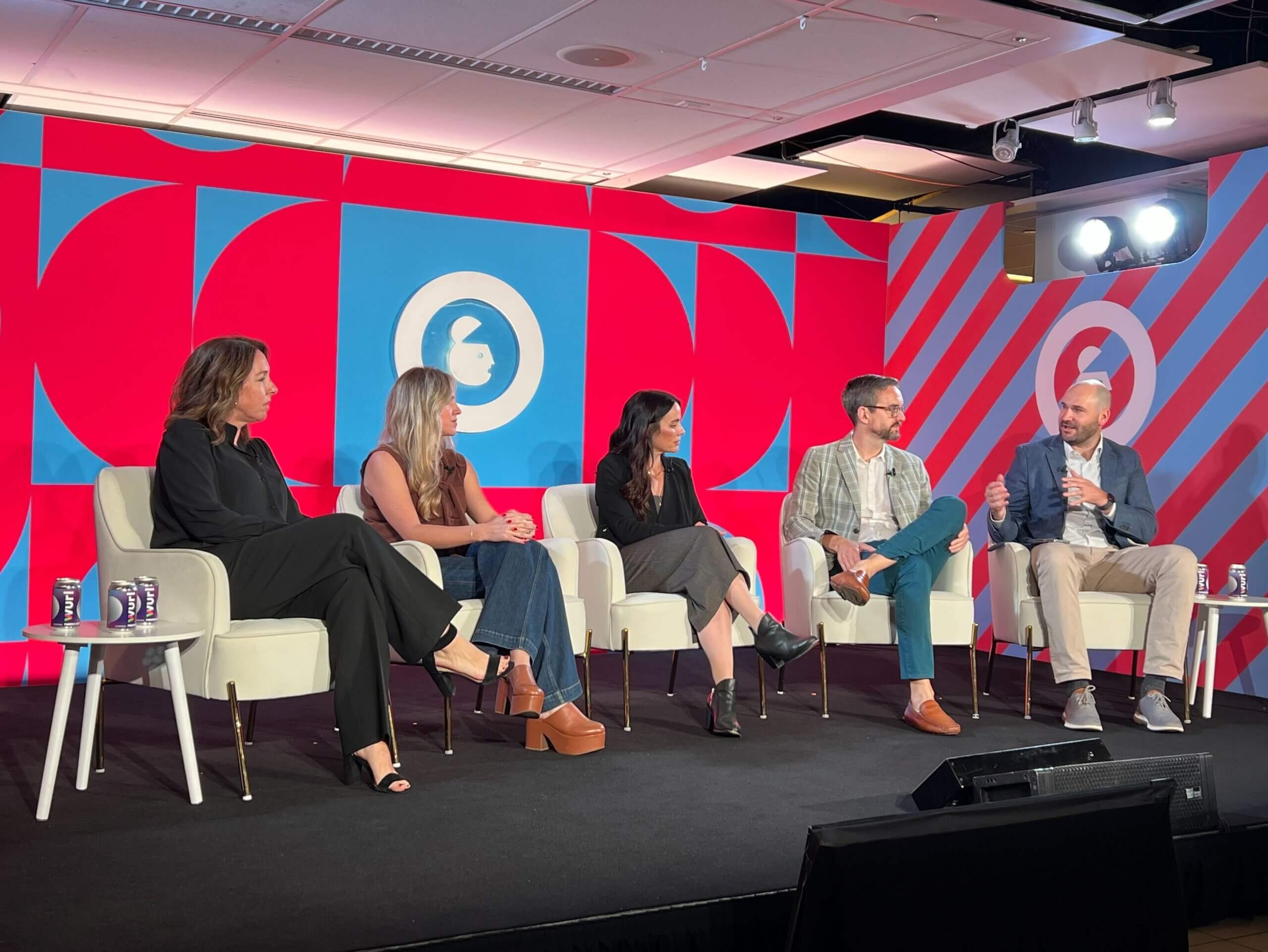
At this year’s Advertising Week New York, Magnite’s Mike Laband, group SVP of revenue, sat down with a panel of industry leaders shaping the next phase of programmatic: Jill Steinhauser, group SVP of platform monetization & partnerships at Warner Bros. Discovery; Jean Fitzpatrick, EVP of commercial strategy at IPG Mediabrands; Scott Ensign, chief strategy officer at Butler/Till; and Kelly McMahon, EVP of global operations at LG Ad Solutions.
Together, they explored how curation is transforming the digital supply chain, from a tactical buying tool into the foundation for a more transparent, efficient, and collaborative marketplace, where buyers and sellers are moving in sync.
In case you missed it, here are five key takeaways from the conversation.
1. Curation isn’t just packaging; it’s a programmatic powerhouse
Once dismissed as jargon, curation is emerging as the connective tissue of modern programmatic buying. For Warner Bros. Discovery’s Steinhauser, it’s hardly new; it’s simply the next evolution of a long-standing practice. “We’ve been curating inventory for years,” Steinhauser said. “What’s changed is how technology allows us to automate, enrich, and scale those efforts across every deal.”
As more decisioning moves to the sell side, private marketplaces are now outpacing the open exchange, signaling a shift toward higher-quality, higher-yield transactions. Curated supply offers buyers a more direct route to inventory, while giving publishers a stronger command of how their media is packaged and sold.
For Fitzpatrick of IPG Mediabrands, the shift is strategic: “Curation lets us connect business outcomes to media execution. It’s how we design packages that reflect each client’s goals and audience priorities.”
In short, curation is no longer about simplifying media; it’s about amplifying what works.
2. Accountability follows ownership
As the supply chain becomes more dynamic, the industry faces a familiar question: who’s responsible for results? For the panelists, the answer was simple: accountability lies with whoever adds value through curation.
“If LG is curating supply with our first-party data, we’re accountable for making sure that inventory performs,” said LG Ad Solutions’ McMahon. “That’s the tradeoff when you move closer to the impression, you own more of the outcome.”
Fitzpatrick noted that accountability requires transparency between partners. “Technology should simplify alignment, not obscure it,” she said. “That means constant communication between buyers and sellers so strategy becomes execution, not guesswork.”
And from the agency perspective, accountability stops at the client. “When performance dips, our clients call us,” said Ensign of Butler/Till. “That’s why visibility into where, how, and why ads are served is mission-critical.”
3. Transparency builds trust and drives performance
Curation’s greatest advantage may be what it removes: opacity. By consolidating inventory closer to its source, curated deals minimize intermediaries, reveal pricing structures, and restore confidence to the marketplace.
That transparency translates directly into performance. Buyers gain confidence that their campaigns are running in premium, brand-safe environments, while publishers see stronger yields from better-valued impressions. “When both sides know exactly what’s being bought and sold, performance follows naturally,” said Steinhauser.
For Ensign, transparency is about alignment of purpose as much as efficiency. “Curation helps us direct our clients’ investments toward partners who share their values—women-owned, B Corps, local media. It’s not just good business; it’s the right business.”
In a complex ecosystem, curation’s clarity offers something novel: mutual trust as a performance driver.
4. Omnichannel by design
As streaming, mobile, and desktop converge, curation is delivering on the long-promised vision of omnichannel performance. By bundling inventory across screens based on shared audience signals, curated marketplaces enable advertisers to follow the consumer journey seamlessly, from CTV exposure to mobile conversion.
With CTV ad spend projected to climb 63% by 2027 to nearly $47 billion, the need for unified, cross-platform strategies has never been more pressing. Curation is also democratizing access to premium video inventory, giving small and midsize advertisers the same level of sophistication that once belonged only to global brands.
As Fitzpatrick put it, “Omnichannel success isn’t about being everywhere—it’s about connecting the right moments everywhere.”
5. AI and the agentic future of curation
If curation is today’s revolution, artificial intelligence will be its accelerant. The rise of agentic workflows—AI systems that learn from past performance to optimize future deals—will soon make curated marketplaces more predictive, personalized, and scalable than ever.
Fitzpatrick pointed to the Acxiom and Magnite integration as proof that AI can already connect data, creative, and activation within a single flow. “The ability to design an audience and see it translate instantly into media execution is a game changer,” she said.
And for Ensign, AI doesn’t replace human strategy; it scales it. “The single-platform era is over,” he said. “AI helps us build purpose-driven marketplaces for every client and every campaign.”
Curation is programmatic’s new currency
As signal loss accelerates, sell-side curation has become a stabilizing force, aligning transparency, performance, and privacy across the ecosystem. It’s helping media buyers transition from chasing efficiency to achieving intelligence, while providing publishers with the control and data integrity they need to thrive. “Programmatic started as a race for automation,” said Ensign in closing. “Now it’s about collaboration, and curation is the bridge that gets us there.”
In a world where global programmatic display ad spend is nearing $387 billion, the next frontier isn’t more automation; it’s smarter collaboration. The future of programmatic won’t just be more efficient. It will be curated for quality, transparency, and to deliver greater value.
Tags: Streaming
Contact Us