
Magnite Midterms 2026: The Supply Side Election
Erik Brydges, Head of Performance & Political Demand
June 17, 2026 | 5 min read
As the 2026 midterm election cycle begins to take shape, political advertisers are navigating an increasingly complex media landscape driven by the continued growth of CTV.
At Magnite Midterms 2026: The Supply Side Election, Magnite brought together publishers, agencies, and political media leaders in Washington, D.C., to discuss how the industry is evolving and what it will take to reach voters more effectively in the months ahead.
The theme for this year’s political election is clear: success will depend on a smarter supply-side strategy.
Publishers Are Preparing for a More Programmatic Political Cycle
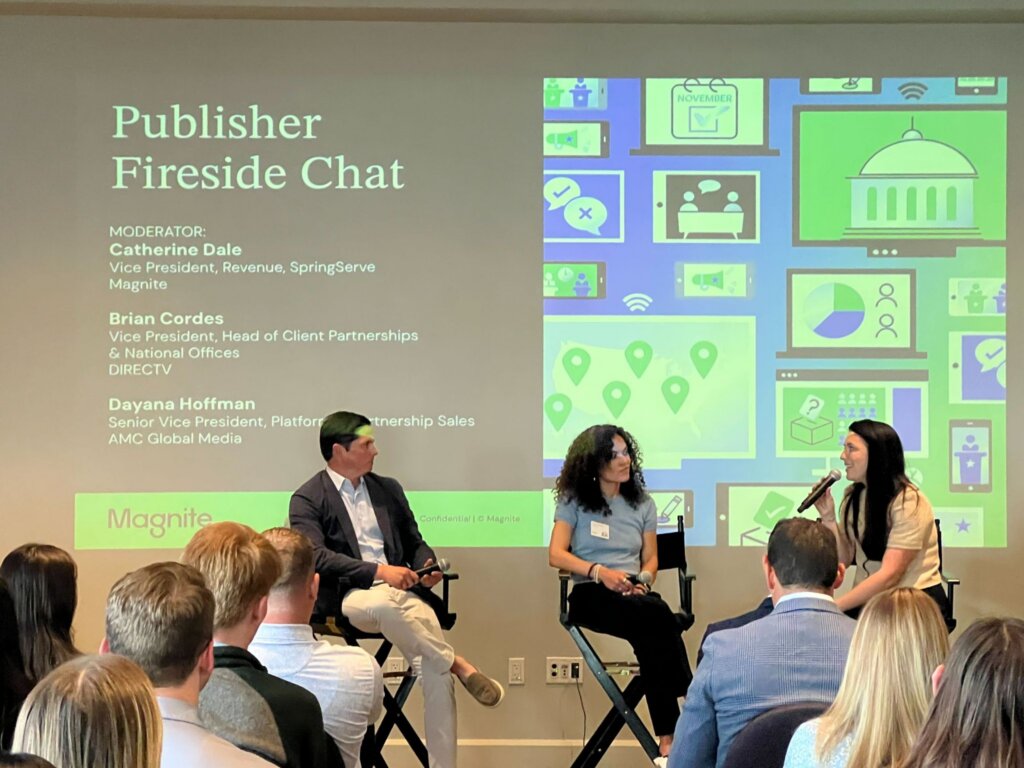
During the publisher fireside chat, Magnite’s Vice President, Revenue, SpringServe, Catherine Dale, led a conversation with Dayana Hoffman of AMC Global Media and Brian Cordes of DIRECTV Advertising about how premium media owners are preparing for political demand.
For AMC Global Media, the focus has been on building access across a growing, distributed footprint. Hoffman noted that AMC has spent years developing 20+ FAST channels across dozens of distribution endpoints, creating new ways for buyers to reach incremental audiences beyond traditional linear.
“We want to be able to ensure that our inventory is available anywhere and in any way that you want to access it,” Hoffman said.
DIRECTV Advertising has also made major changes since the last cycle, including opening more of its footprint to programmatic buying. Cordes explained that buyers can now access inventory across DIRECTV’s full environment, including live sports and state-level reach opportunities.
“The biggest step forward we took this year was providing that optionality of allowing brands and campaigns to come in and buy across our entire footprint programmatically,” Cordes said.
Going Direct Matters
A recurring point across the discussion was the value of going direct to the supplier through Magnite. For publishers, this creates more transparency, stronger reporting, better pricing control, and more confidence in delivery. For buyers, it means cleaner access to premium inventory and less waste.
The panel also addressed common political inventory myths, including the idea that fragmentation automatically means lower-quality inventory, that live sports is easy to buy, and that all vendors offer equal access.
Hoffman pushed back on the fragmentation myth directly, pointing to the importance of working through trusted partners. “Being able to have a single source, working with a partner like Magnite and us as a publisher, has really allowed us to remove those silos,” she said.
Buyers Want Efficiency, Transparency, and Proof
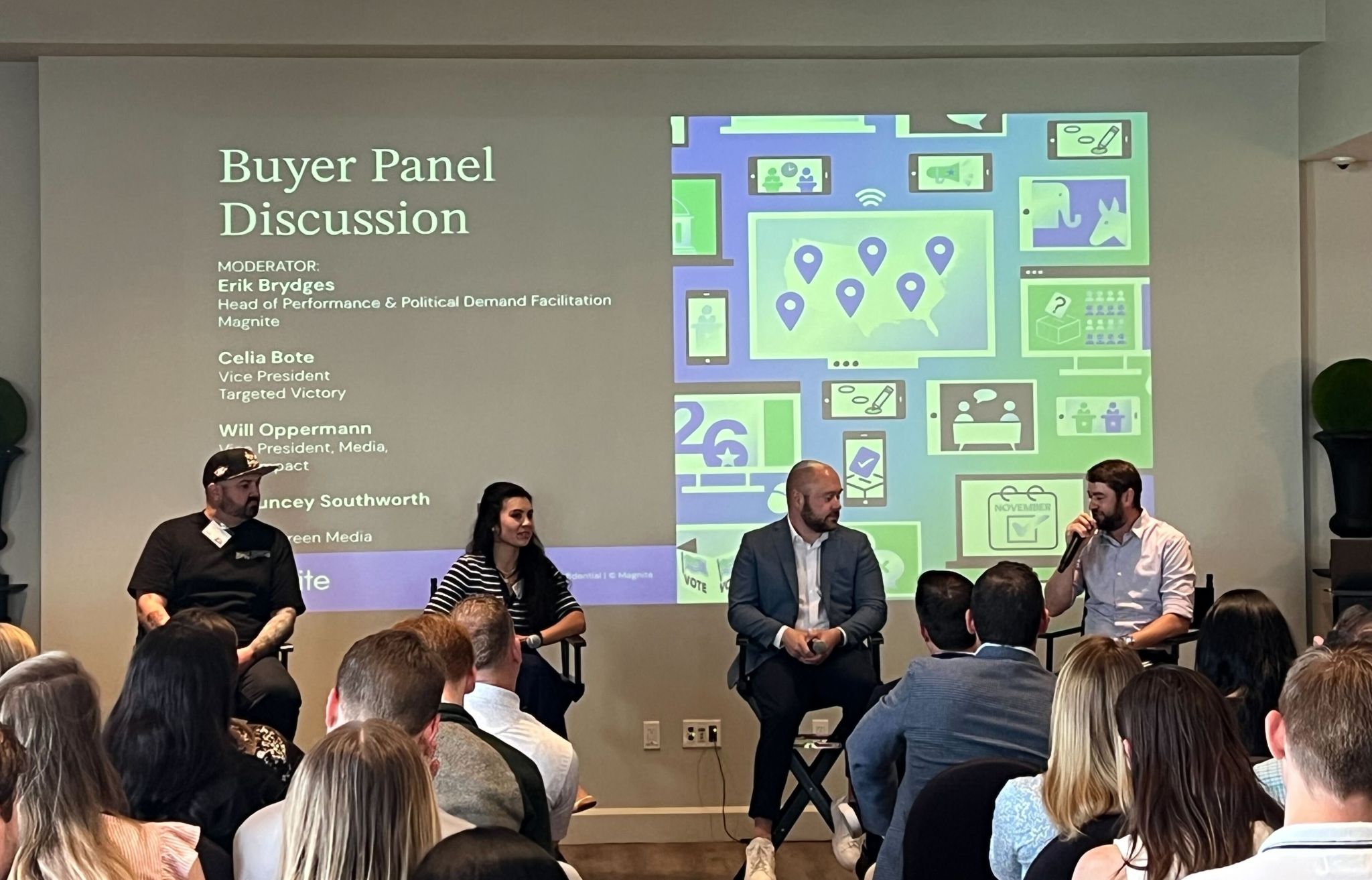
The buyer panel featured Magnite’s Head of Performance & Political Demand Erik Brydges in conversation with Chauncey Southworth of Cross Screen Media, Celia Bote of Targeted Victory, and Will Oppermann of GPS Impact.
The group emphasized that voters do not think in channels, platforms, or buying paths. They simply consume content.
“We live in a fractured, fragmented environment,” Bote said, pointing to the challenge buyers face in reaching voters across streaming, digital, and traditional channels. “Everyone has a different sort of tool that’s available to us that we can use to find our voters.”
As measurement and attribution capabilities improve, buyers are gaining a clearer view of what is actually driving voter engagement across channels. Cross-screen and cross-channel measurement is helping campaigns make smarter investment decisions and move beyond the siloed budgets traditionally assigned to specific channels.
“It’s all about voter contact. What is the most efficient way to reach the voters you need to reach?” said Southworth.
That reality puts pressure on political buyers to plan holistically across CTV, linear, mobile, audio, display, direct mail, phones, and door-knocking. The goal is not just to buy media, but to reach the right voters with the right frequency and verify the impact.
“The firms that will win are those that will holistically look at how a voter is able to be contacted, how they’re consuming content, and not be wed to one budget breakout for everything that you’re working on,” Southworth added.
Oppermann emphasized, “It’s really important working with a partner like Magnite, where you have that transparency even mid-flight, where you can see, does this align with where I expect my media dollars to go?”
Live Sports Is Powerful, But Complex
Live sports came up repeatedly throughout the conversation, especially as political buyers look for high-attention environments ahead of the election cycle. While there was broad agreement around the value and scale live sports can deliver, buyers also emphasized the importance of having clearer visibility into what inventory is actually available.
Bote noted that buyers need clear expectations about whether they are accessing in-game inventory, shoulder content, or other sports-adjacent environments.
The broader conversation reinforced a common theme from the day: premium inventory matters, but strong partnerships, clear and transparent reporting, and realistic forecasting are what ultimately enable political buyers to value opportunities to reach voters correctly and determine investment levels appropriately.
The 2026 Playbook Starts Now
As demand intensifies closer to Election Day, the speakers agreed that buyers should not wait until late in the cycle to test new formats and pathways. CTV, streaming audio, podcasts, online video, display, and live sports all have a role to play, especially in competitive states where available impressions may be limited.
“Leaving anything off the table is a mistake,” Oppermann said. “Do all your QA now.”
The conversations throughout the event demonstrated how, during a high-stakes political year, success will require breaking down silos, improving transparency, and building smarter paths to premium supply.
Contact Us